The Truth About Hip Hop Classes (and Why Specialist Training Is a Must)
Hip hop looks fun and effortless, but great teaching takes real understanding. When it’s taught right, you don’t just learn moves. You learn rhythm, confidence, and how to feel music for yourself.
Hip hop began at parties with people laughing, copying each other, and enjoying the moment. That same feeling is what real hip hop still gives today. It’s meant to feel good, not pressured or confusing.
The truth is, not every class teaches that. A lot of what’s out there looks like hip hop, but it doesn’t feel like it. Specialist training keeps the real thing alive. It helps both kids and adults find their groove, understand the stories behind the movement, and build confidence that lasts far beyond the studio.
If you were around in the 80s, you’ve probably done The Wop without even realising. That simple shoulder bounce and the feeling it gave people is what made so many fall in love with dance in the first place.
That’s what we teach. The real thing - movement that feels natural, fun, and full of life.

Breakin’ class footage at The Dance Spot
Feeling the music is the point
Hip hop was created to be fun, free, and inviting, not stressful or intimidating.
So if you’ve ever been to a “hip hop” class and thought, “Why is this so hard?” you’re not alone, and it’s probably not your fault.
Real hip hop was never meant to feel like an exam or a test. It’s about expression, not perfection. When it’s taught right, it makes you want to move, not overthink.
1. It starts with groove, not tricks
Before the fancy footwork or choreography, there’s groove.
That’s the bounce, the sway, the nod. That moment when the beat hits and your body just moves.
If your class skips that, it’s like learning to talk before you’ve learned to listen. Groove is what makes hip hop feel natural. Once you find it, the rest comes easier. It’s not about being perfect, it’s about feeling the music and letting go a little.
2. It’s not supposed to be scary (but yes, it still builds you)
Your first class might feel a bit terrifying. Totally get that, and if you’ve already pushed through it, huge respect.
Hip hop came from communities dancing together for fun, not judgement. Nobody was worrying about getting it right. They were just moving, feeling the beat, and having a laugh.
If a class feels impossible, it’s usually because the basics were skipped, or you’ve accidentally landed in something a bit too advanced for now. And that’s okay, we’ve all been there.
Let’s be real though, hip hop will challenge you. You won’t be doing headspins in your first week, but it shouldn’t feel out of reach either. Each class should build your rhythm, confidence, and coordination, while still being fun. Once you hit the advanced level, we’ll push you, but you’ll be ready for it by then.
3. It’s a culture, not just a playlist
Hip hop is more than dancing to rap songs. It’s a full culture built around five main parts:
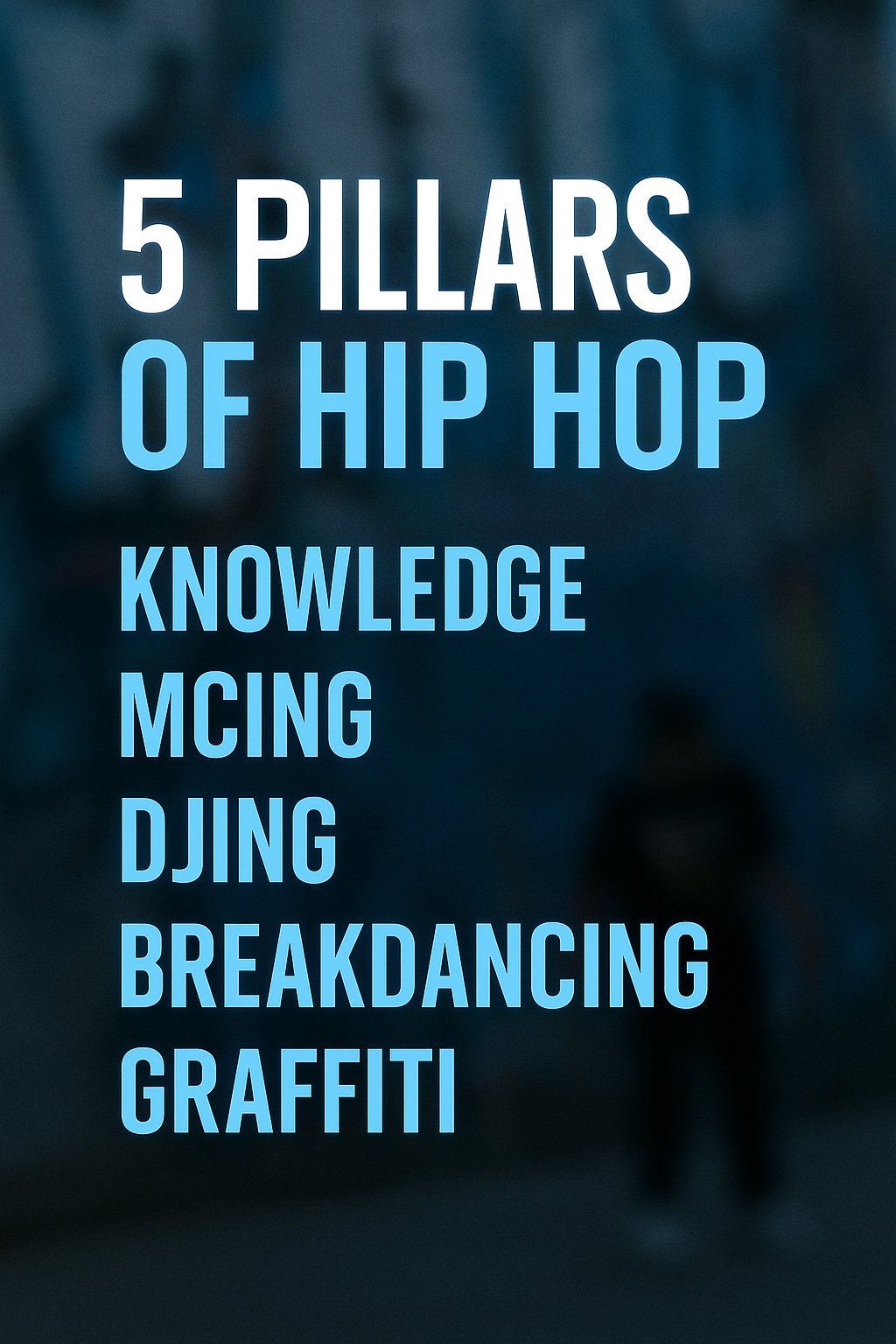
5 pillars of hiphop infographic
You don’t need to study all five pillars to join a class, but when teachers understand them, their lessons hit differently. You feel like part of something real, not just another routine.
And look, if you prefer routines, that’s totally fine. Choreography can be amazing too, especially when it’s taught with some foundation behind it. As long as there’s groove and a bit of freestyle mixed in, you’re learning the real thing.
The best teachers won’t force you to freestyle, they’ll help you fall in love with it. Because once you get that feeling, it’s addictive in the best way, even if you think you hate it at first.
4. Freestyle = fun, not fear
When people hear “freestyle,” they often imagine a circle of doom, one person in the middle, everyone watching. Nope. Freestyle just means trying your own ideas. It’s moving how the music feels to you, even if that’s just a small bounce or step to start with.
Once you realise there’s no wrong way to feel a beat, it becomes the best part of class.
5. If it feels impossible, something’s off
Hip hop was never meant to be confusing. The people who created it didn’t have teachers, they had music, friends, and curiosity.
Yes, hip hop should challenge you. You’ll work, you’ll sweat, you’ll get tired, but it should still make sense. The challenge should feel exciting, not frustrating.
There’s a big difference between learning a groove and faking one because no one’s ever taught you how it works. When you understand the groove, even the hard moves start to feel doable.
When it’s taught right, your body moves with the music instead of chasing it. That’s when hip hop starts to click.
6. You can tell when it’s real
You’ll feel it straight away. The music’s right, the room’s relaxed, and the teacher’s dancing with you, not barking over you.
There’s laughter, not pressure.
Progress, not panic.
Challenge, not confusion.
That’s exactly how hip hop was always meant to feel.
7. Our dancers prove it
Some of our youngest students at The Dance Spot can tell you what a “cypher” is or where the “Reebok” came from, and they’ll tell you with pride.
Because they’re not just learning steps. They’re learning to feel music, express themselves, and grow through something real.
The bottom line
Hip hop started at parties, not by stressing over perfection in a studio. It’s meant to feel good, not scary.
There will always be challenges, but the right kind helps you grow. The wrong kind just makes you doubt yourself.
If a class ever made you think, “this is too hard” or “dance just isn’t for me,” it’s probably not you. Maybe it just wasn’t hip hop.
Because when you learn it right, with groove, music, and good energy, it suddenly makes sense. You laugh, you sweat, and you surprise yourself.
“That’s what makes it hip hop.”
(A nod to the classic “Hey, I’m Dina, this is hip hop” moment from the 80s — where even back then, real dancers were side-eyeing jazz teachers trying to teach hip hop.)

“Hey, I’m Dina” (Funny hip hop tutorial clip from the 80’s)
